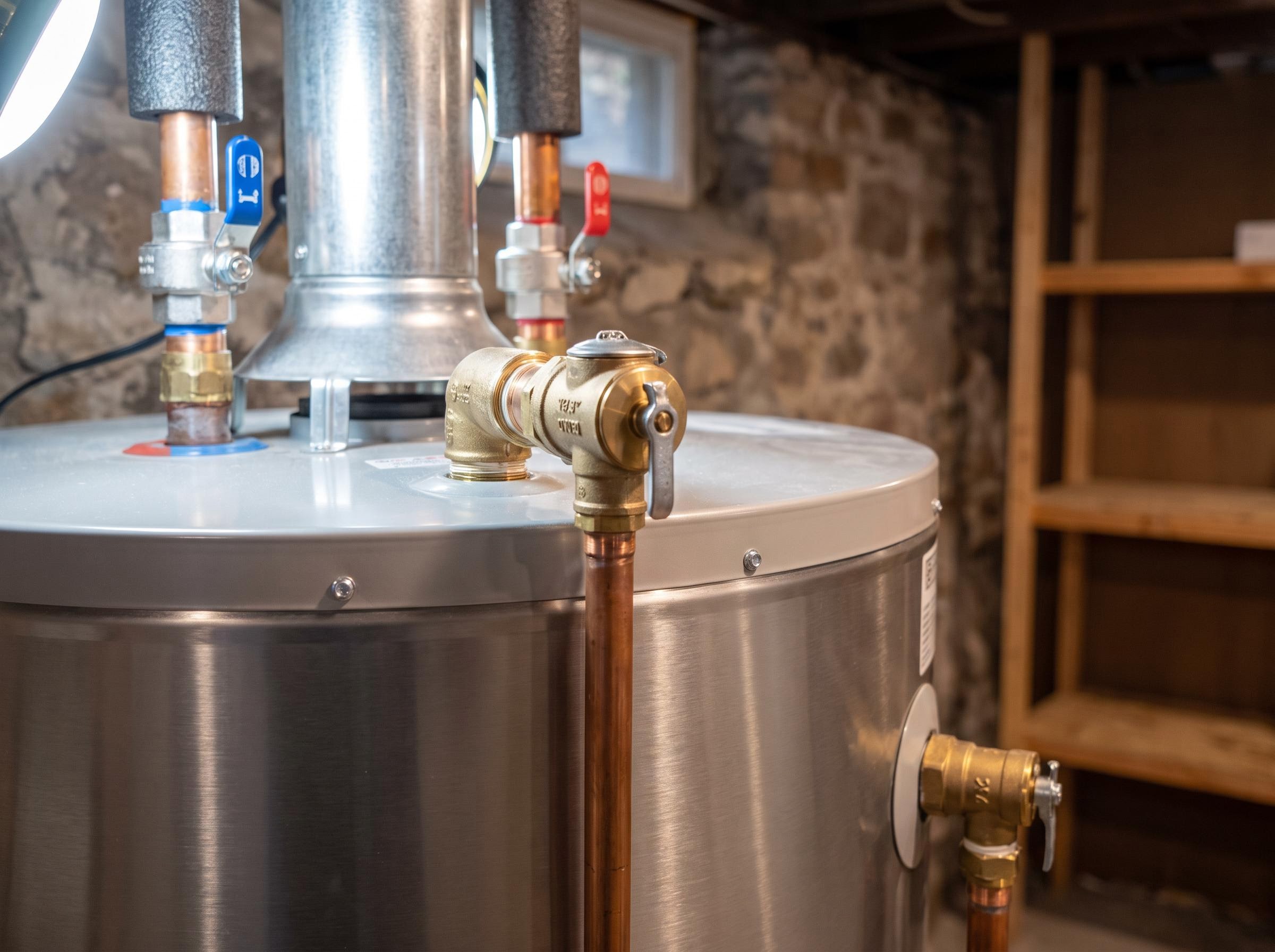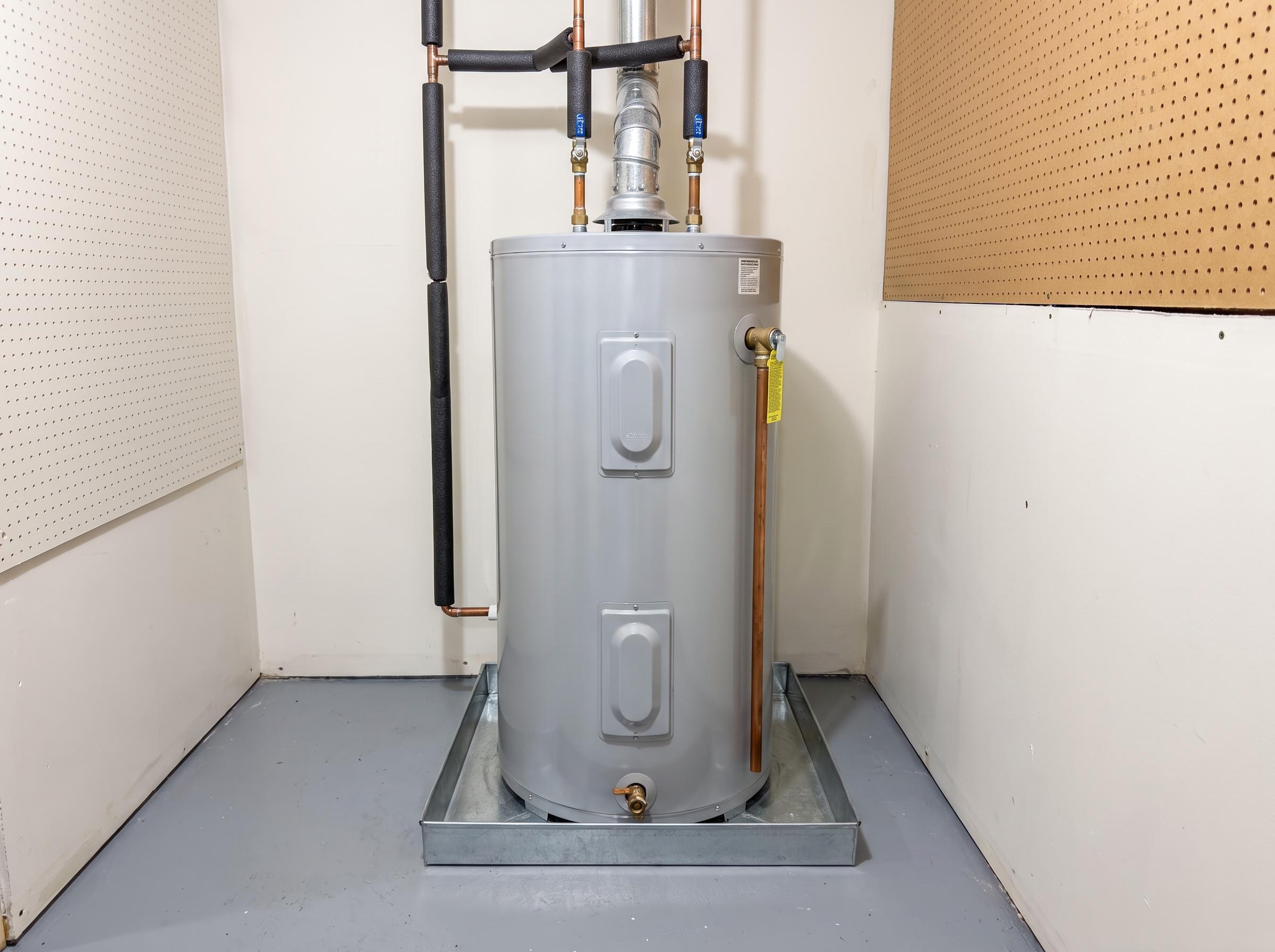

Gas water heaters
- Pilot will not stay lit
- Water around the tank base
- T&P valve dripping
- Gas control not responding
- Rumbling or popping from sediment

Worcester, MA
A cold shower in a Worcester winter is not a wait-and-see problem. Roto-Rooter diagnoses gas, electric, and tankless heaters, then repairs the part that failed or swaps the tank when the shell is done. Posted install labor is $600. Call or text (508) 335-3306.
Most Worcester homes still run a tank in the basement. We work on those, plus tankless units hung in closets and laundry rooms. Here is what usually brings a call.


A water heater is a steel tank, a heat source, and a few safety parts. When one of those parts fails and the tank is still sound, a repair is the cheaper path. A new thermostat, heating element, gas valve, thermocouple, or T&P valve often puts hot water back in the house the same visit.
Replacement makes sense when the tank is leaking, the jacket is rusted through, or the unit is old enough that the next failure is a flood in the basement. Worcester’s hard water shortens tank life. Sediment stacks up, the burner works harder, and you run out of hot water sooner than you used to.
Roto-Rooter’s experienced Worcester plumbing technicians service all types of water heaters, including traditional, tankless, and solar models. We handle disconnect, set, piping, venting checks on gas, and the first fire-up.
Posted water heater installation is $600 labor. That covers the swap: take out the old tank, set the new one, reconnect water and the fuel or electric supply, and test. Repairs are quoted on site after we see the unit.
Repairs are quoted on site after we see the unit. A bad element is a different job than a leaking tank. Call or text (508) 335-3306 with the make, fuel type, and what the heater is doing — no heat, lukewarm, water on the floor — so we show up with the right parts in the van.
The average lifespan of a conventional water heater is 11 years, with tankless models lasting about two decades. Make sure you’re scheduling regular water heater maintenance.
You do not need a service contract. A few checks each year catch the failures that soak a basement:
A straightforward tank-for-tank swap is usually a few hours once we are on site and the new unit is in the house. Extra time if the vent, gas line, or electric circuit has to be brought up to a safe install, or if the old tank has to be drained and walked up a tight bulkhead.
Most two-bath homes run 40 or 50 gallons. Count people and overlapping showers, not just bedrooms. Tankless sizing is about flow rate (gallons per minute), not tank volume. We quote the replacement after we see the space and fuel type.
Match the fuel the house already has unless you are ready to run a new gas line or a heavy electric circuit. Tankless saves floor space and can help with recovery, but Worcester’s mineral content means it needs descaling. A 40- or 50-gallon tank still fits most families in this area.
Not always. Anode rods, dielectric fittings, and the way the tank is piped all affect color and odor. We check those before we tell you to replace the heater. If the tank itself is rusting from the inside out, replacement is the honest answer.
Call Roto-Rooter in Worcester. 61 Sandra Dr, Worcester, MA 01604.